




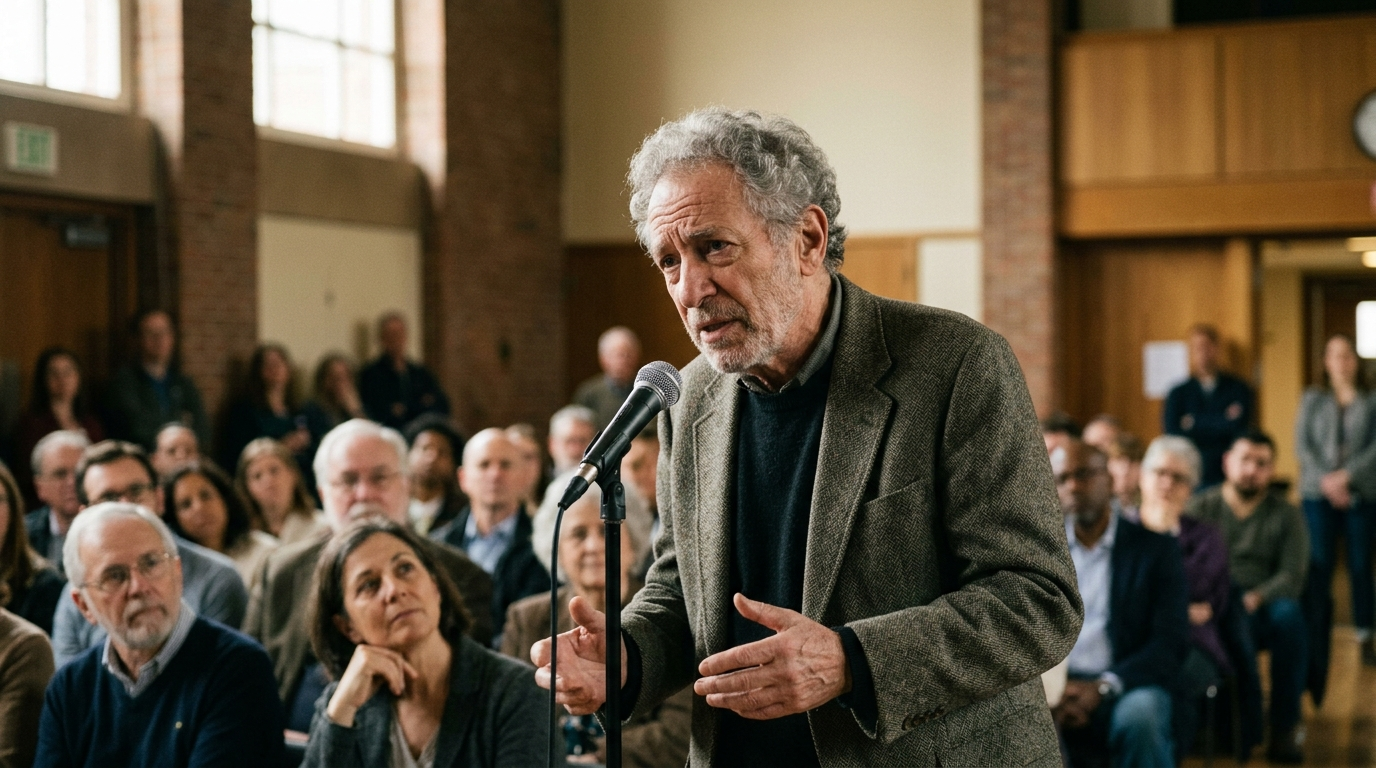
A sharp critique of government planning has raised a basic question about public policy: How much can officials shape society when human knowledge is limited?
The argument accepts that every person faces limits in understanding the future. It then draws a distinction between private judgment and state action. Individuals may act with incomplete information, but governments can apply such judgments across entire populations.
“It insults none of us to say that we’re constrained by the known. But it insults government that it presumes to shape things despite being constrained by the known.”
The speaker is not identified. No specific government, policy, or date is named. The statement instead offers a broad warning about political authority and certainty.
A Warning About Limited Knowledge
The phrase “constrained by the known” recognizes a common human condition. Decisions rely on available facts, prior experience, and assumptions. Yet future events often challenge those assumptions.
For individuals, the effects of a poor choice may remain limited. Government decisions can carry wider consequences because they are backed by law, public money, and regulatory power.
The critique therefore focuses less on ignorance itself than on the scale of official action. Its central claim is that limited knowledge should produce greater restraint among policymakers.
That concern has a long history in political and economic thought. Critics of centralized planning have argued that officials cannot gather every piece of local knowledge held by households, workers, and businesses. Information also changes as people react to new rules.
Planning Still Serves Public Needs
The statement presents a forceful case for caution, but it does not settle the debate. Governments routinely act under uncertainty because waiting can also cause harm.



Public institutions must prepare for disasters, manage infrastructure, oversee markets, and respond to health threats. Each task requires forecasts that may prove wrong. A refusal to act can be a decision with serious costs of its own.
Supporters of active government would also note that public agencies can collect information unavailable to any single citizen. They can coordinate large projects and set common rules where individual action may be insufficient.
The practical dispute is therefore not whether knowledge has limits. Most sides accept that point. The dispute concerns how officials should respond to those limits.
- One approach favors narrow rules and local decision-making.
- Another supports coordinated action with regular review.
- A third emphasizes trials, public data, and reversible policies.
Humility as a Policy Standard
The critique has clear implications for how laws are designed. Officials can state their assumptions, publish evidence, and identify what would cause a policy to change.
They can also use temporary programs or smaller tests before imposing broad requirements. Independent review may reveal failures that agencies or political leaders overlook.
Public participation offers another check. People affected by a rule may possess practical knowledge that is missing from official models. Listening does not remove uncertainty, but it can expose weak assumptions before costs spread.
The statement ultimately calls for institutional humility, not personal embarrassment. Its challenge is directed at systems that treat forecasts as settled facts or present political choices as inevitable.
The larger lesson is that uncertainty cannot excuse either reckless action or permanent inaction. What matters is whether governments acknowledge their limits, explain their reasoning, and correct course when evidence changes. Future policy debates will test whether officials can exercise authority without claiming knowledge they do not possess.