




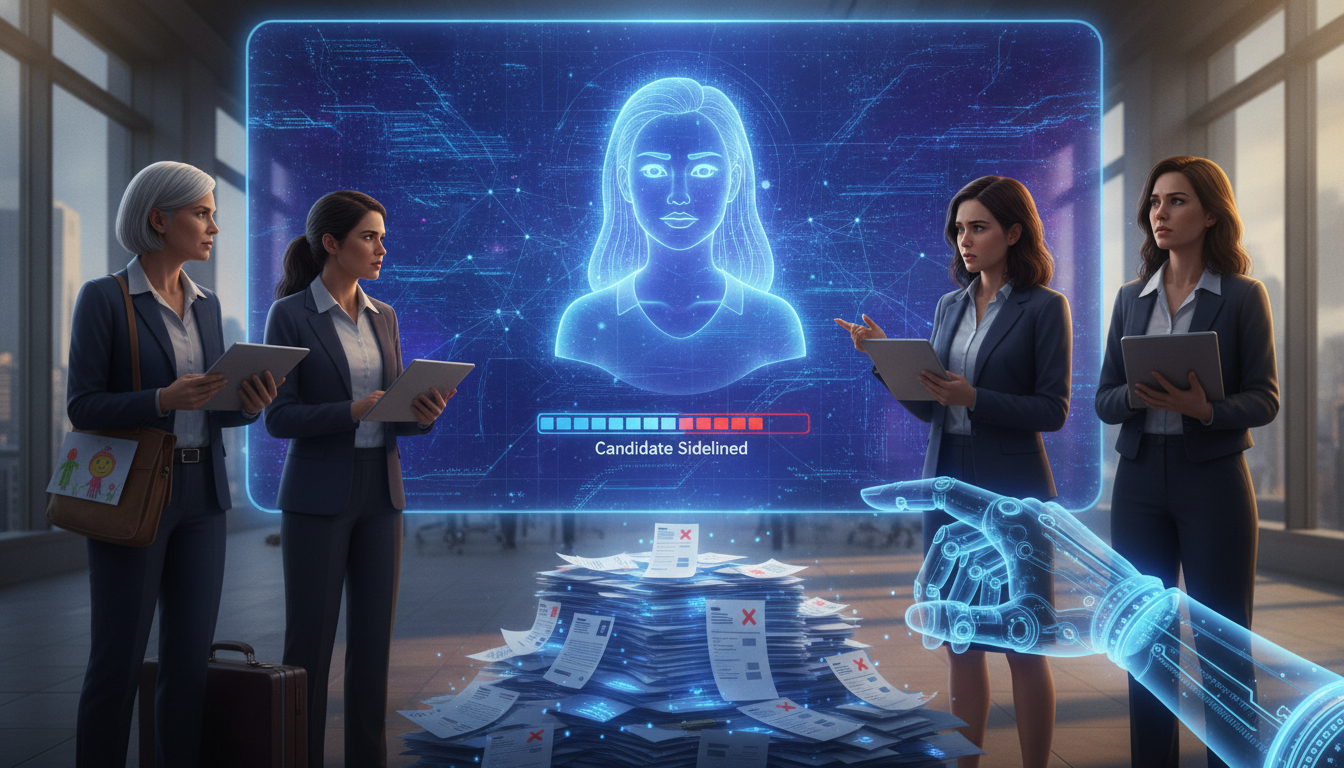
A growing debate is challenging one of the hottest trends in hiring. As companies scale up artificial intelligence in recruitment, advocates and researchers are asking whether automated screening is sidelining women who are reentering the job market after a career break. The concern has surfaced as employers race to fill roles and reduce costs, often relying on algorithms to sift applications at speed.
The question is urgent. Women’s prime-age labor force participation in the United States hit record highs in 2023, yet many candidates still face resume gaps from caregiving or pandemic disruptions. Several laws now target algorithmic bias in hiring, from New York City’s audit requirement for automated employment decision tools to new European Union rules that classify employment AI as high risk.
Are AI recruitment tools disadvantaging women who are seeking to return to the workplace?
What The Question Signals
The core worry is not new: automated systems learn from historical data. If past hiring favored continuous work histories or coded leadership as male, models can repeat those patterns. Early warnings date back to 2018, when a large tech firm halted an internal resume screener after it downgraded terms linked to women. Regulators have since increased scrutiny of tools that rank, score, or filter applicants.
Returners sit at the crosshairs. Many have rich experience but lack recent titles, frequent job hops, or keywords that match rigid templates. AI systems tuned to recent activity or narrow keyword matches can push their resumes to the bottom.
How Automated Screening Works
Vendors market tools that parse resumes, scrape profiles, and even analyze video interviews. Some systems predict job success by comparing applicants with top performers. Others screen for gaps, tenure, and certification matches. Each choice of feature can create hidden rules.
Experts warn that proxy variables can replicate bias. Career breaks can become a negative signal. Rigid scoring on continuous employment, timing of promotions, or certain extracurriculars can sort out caregivers at scale.
Evidence, Law, and Risk
Regulators in the United States and Europe say employers remain responsible for outcomes. The U.S. Equal Employment Opportunity Commission in 2023 warned that using AI in hiring does not shield companies from anti-discrimination law. The NYC bias-audit law requires annual testing of certain hiring tools and public summaries of impact by gender and race. The EU AI Act places strict demands on employment AI, including risk management and transparency.
Academic research on bias in automated scoring points to several red flags. Variables that track gaps, limited recent experience, or non-linear careers can disadvantage women returning after caregiving. Studies on the motherhood penalty show wage and promotion costs that could be amplified when such features feed a model.



Some companies report progress through targeted programs. Returnship tracks, skills-based hiring, and assessments tied to real tasks have helped restart careers and diversify shortlists. But these approaches often run around, not through, general-purpose ranking engines.
Impact On Women Seeking A Second Act
Women who step back for caregiving face three hurdles with automated tools. First, resume parsers can score gaps as risk. Second, keyword screens may miss transferable skills built through volunteering or freelance projects. Third, models trained on past top performers can mirror male-dominated teams.
The result is fewer callbacks, longer job searches, and underemployment. Advocates say the effect is harsher in industries that rely on strict filters, like finance and technology. Small changes to model features and job ads can shift outcomes, suggesting the harm is not fixed but design-driven.
What Employers Can Do Now
- Remove continuous-employment and tenure penalties from automated scoring.
- Run bias audits that test outcomes for candidates with career breaks.
- Adopt skills-based screening tied to real work samples.
- Offer returnships and structured interviews with clear rubrics.
- Give candidates a simple way to explain gaps early in the process.
Procurement matters too. Contracts should require transparency on model features, training data sources, and audit rights. Employers can insist on explainability for adverse decisions and on options to override automated rankings.
Signals To Watch
Several trends could shift the field. First, regulatory audits are moving from guidance to enforcement. Second, large employers are piloting models that emphasize skills over pedigree and timing. Third, standardized skills taxonomies may help resumes from returners match more roles.
Worker advocates want clearer notices when AI screens applications and swift access to human review. Vendors say new models can reduce bias when trained on curated data and evaluated with strict parity metrics. Independent testing will be key to sorting real progress from marketing claims.
The question now shaping boardrooms and HR teams is simple and sharp. If a tool cannot show fair outcomes for people with career breaks, it should not decide who gets seen.
The latest developments point to a practical path. Employers can pair automation with transparency, human oversight, and skills-first hiring. Readers should watch for more public audit reports, clearer candidate disclosures, and measurable gains in callback rates for returners. The stakes are clear. Fair screening is not only a legal risk issue, it is a talent advantage in a tight labor market.