




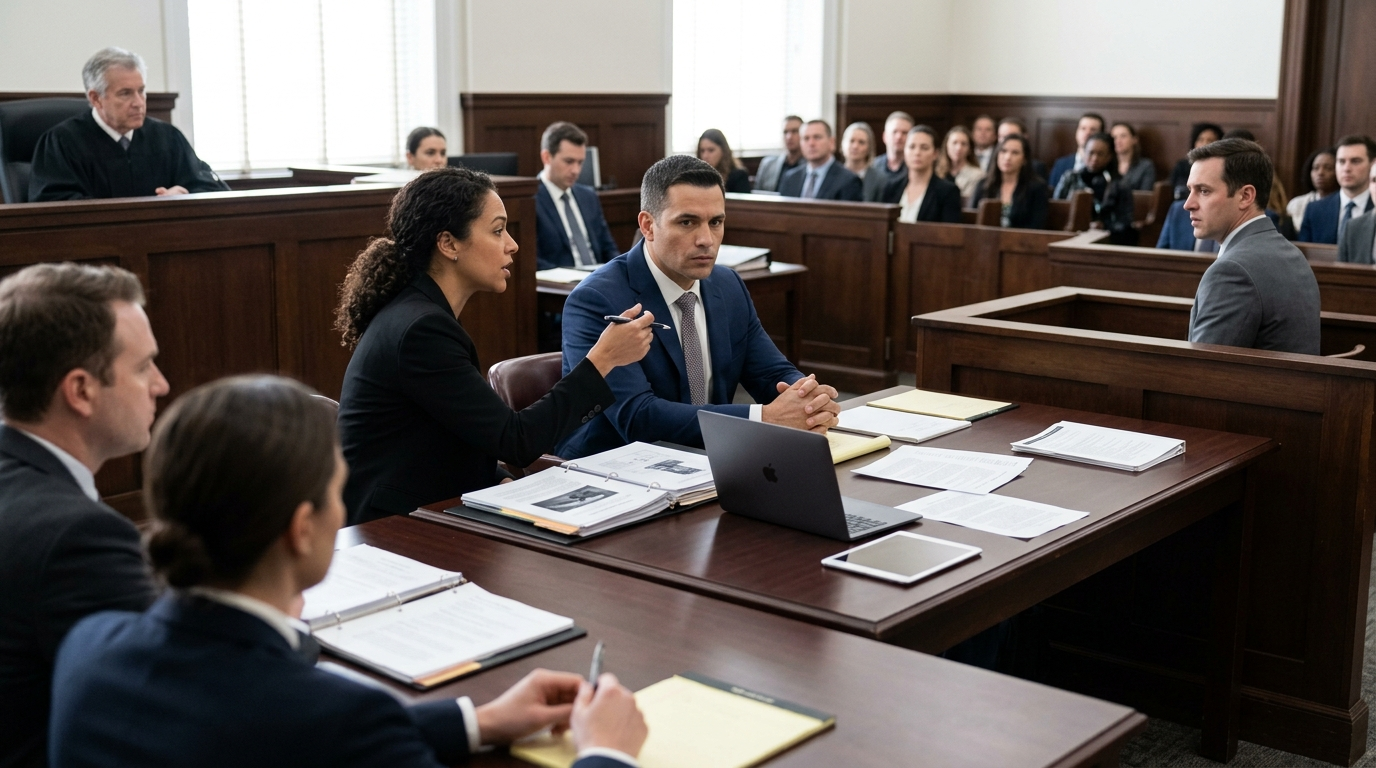
The murder-for-hire trial of Mario Fernandez-Saldana entered its fourth day as arguments intensified over two central areas of evidence: a weapons investigation and a digital paper trail.
The proceedings have reached a stage where the handling and interpretation of evidence may shape the direction of the case. Prosecutors and defense attorneys are expected to press competing accounts of what the records show and how much weight jurors should give them.
Weapons Evidence Draws Scrutiny
The weapons investigation has emerged as a key point in the legal dispute. Such evidence can include firearms, ammunition, forensic testing, purchase records, or information linking a weapon to people and places.
However, the available case update does not identify a specific weapon or describe any test results presented in court. It also does not state whether investigators recovered a firearm tied to the alleged crime.
That distinction matters. A weapon’s value as evidence depends on whether investigators can establish a reliable link between the item, the defendant, and the alleged offense.
Defense lawyers can challenge that connection by questioning collection methods, laboratory findings, witness accounts, or the chain of custody. Prosecutors, in turn, may use records and expert testimony to argue that separate pieces of evidence support one another.
Digital Records Take a Larger Role
The trial is also focusing on a digital paper trail. That broad term may refer to communications, device data, account activity, location records, or online transactions. The precise records at issue have not been detailed.
Digital evidence often gives jurors a timeline that can be compared with physical evidence and witness testimony. Its strength depends on whether the information is authentic, complete, and tied to the correct user.

Several questions commonly shape disputes over electronic records:
- Who controlled the device or account?
- Were the records collected under proper legal authority?
- Do timestamps and location data support the alleged timeline?
- Could another person have created or accessed the material?
Metadata can provide useful context, but it does not always explain intent. A message, search, or transaction may require supporting evidence before it can prove a larger claim.
Competing Narratives Face a High Bar
A murder-for-hire prosecution generally requires more than proof that a killing occurred. The state must support the charged arrangement and connect the accused to it under the law governing the case.
Fernandez-Saldana is on trial, and the presumption of innocence remains in place unless prosecutors prove guilt under the required standard. The current update does not report a verdict or describe any final ruling on the disputed evidence.
The defense may seek to separate Fernandez-Saldana from the weapons inquiry or electronic records. It may also argue that investigators interpreted incomplete facts as proof of a coordinated plan.
Prosecutors may answer by presenting the evidence as a connected sequence. Under that approach, physical findings and digital records could be used together to establish timing, communication, preparation, or association.
What Day Four Could Clarify
The fourth day could provide a clearer view of how each side plans to organize its case. Testimony about evidence collection may be especially important because jurors must decide both what happened and whether the supporting material is dependable.
Future proceedings may also clarify whether the weapons investigation directly supports the murder-for-hire allegation or serves mainly as background. More detail about the digital records could show whether they establish direct communication or only indirect connections.
For now, the trial’s focus reflects a broader shift in criminal cases. Physical evidence remains important, but phones, accounts, timestamps, and transactions increasingly help build or challenge timelines.
The central issue is not simply how much evidence is presented. Jurors must assess whether each item was lawfully obtained, accurately interpreted, and convincingly connected to Fernandez-Saldana. The next phase of testimony may determine whether the weapons inquiry and digital trail reinforce each other or leave gaps that support reasonable doubt.