




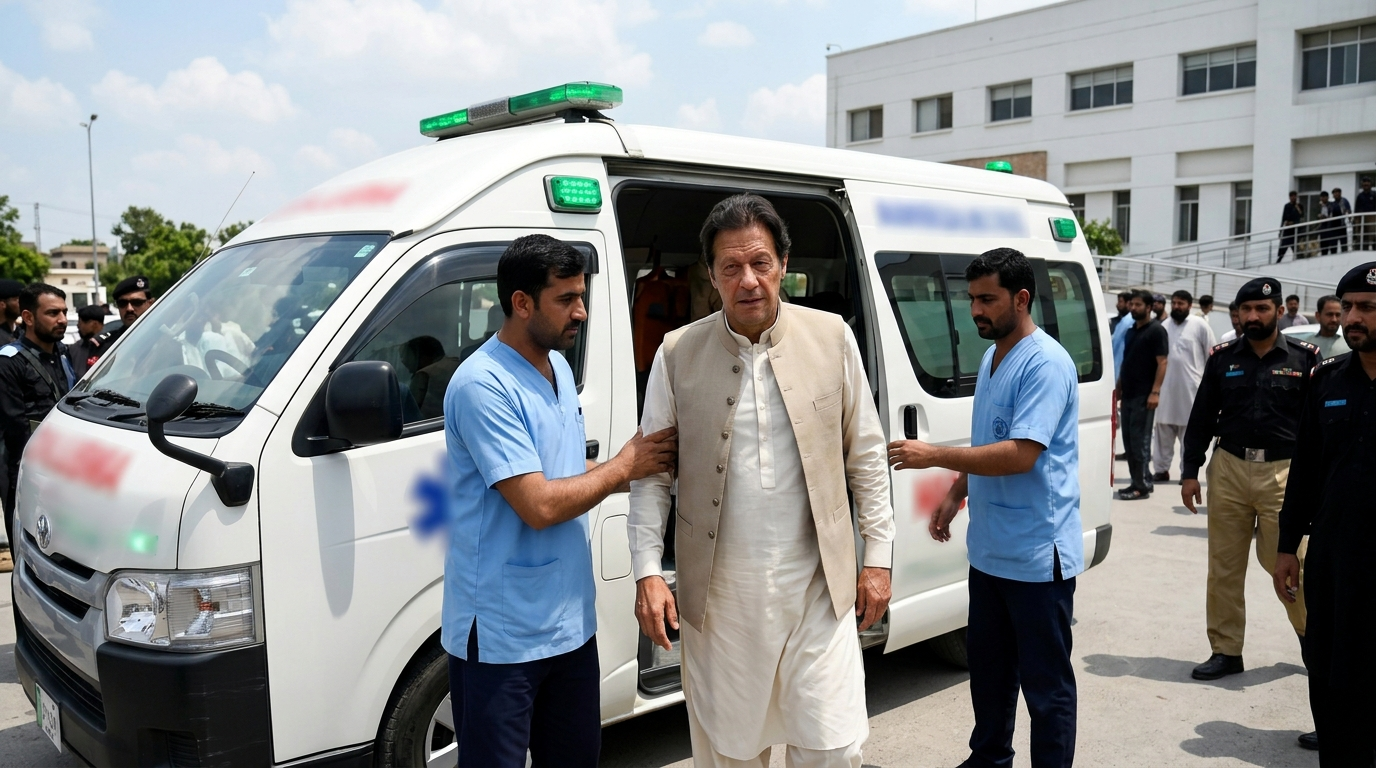
Pakistan’s former prime minister Imran Khan has been moved from prison to a hospital following an order from the country’s highest court, his political party said.
Pakistan Tehreek-e-Insaf, known as PTI, announced the transfer in a statement. The party did not provide details about Khan’s health, the hospital, or the terms of the court order.
The development puts fresh attention on the treatment of one of Pakistan’s most influential political figures. It also places the country’s courts at the center of a case with major political and public interest.
Limited Information About the Transfer
PTI said Khan had been “transferred to a hospital from prison” after the top court issued its order. No medical diagnosis was included in the announcement.
The available information leaves several questions unanswered:
- Which hospital received Khan
- Whether the transfer was for treatment or medical tests
- How long he may remain there
- Whether his custody conditions have changed
There was also no immediate information about the court’s reasoning. Without the written order or an official medical report, the urgency and scope of the transfer remain unclear.
A Major Figure in Pakistani Politics
Khan served as Pakistan’s prime minister before becoming the country’s former head of government. He also leads PTI, which remains closely tied to his political identity and public support.
His move from prison to medical care is likely to draw attention from supporters, government officials, lawyers, and rights groups. Questions about the health and detention conditions of senior political figures often carry wider significance in Pakistan.



PTI’s announcement provides the party’s account of events. Further confirmation from prison authorities, hospital officials, or the court would give a clearer picture of Khan’s condition and legal status.
Court Intervention Raises Legal Questions
The involvement of Pakistan’s top court indicates that Khan’s transfer was not presented as a routine prison decision. It followed judicial action, though the exact legal request and findings were not disclosed.
That distinction matters because courts can intervene in detention matters involving access to treatment, prison conditions, and legal rights. The information released so far does not establish which concern led to the order.
A hospital transfer also does not, by itself, mean Khan has been released. Unless a court changes his custody status, a prisoner can remain under official guard while receiving medical care.
What Comes Next
Attention will now turn to any medical assessment and the full court order. Officials may also face calls to explain whether Khan will return to prison and what security rules apply during his hospital stay.
PTI is likely to seek regular updates, given Khan’s position within the party. Authorities, meanwhile, will be expected to balance his medical needs with the legal terms of his detention.
For now, the confirmed development is narrow but important: Khan has left prison for a hospital under an order from Pakistan’s highest court. The next official statements will determine whether the transfer is temporary medical care or part of a wider change in his legal circumstances.