



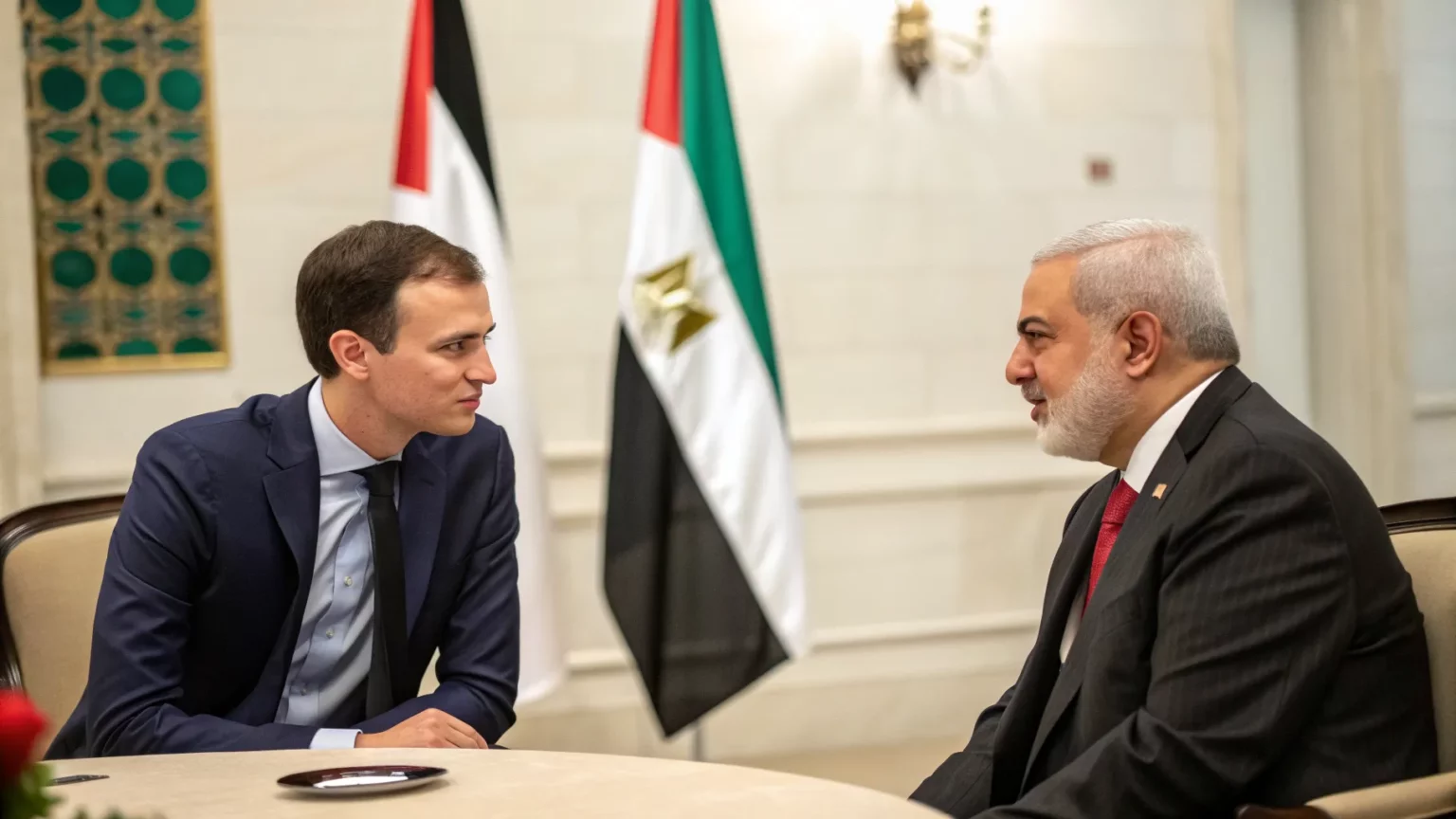
U.S. negotiator Jared Kushner has met a Hamas chief in Egypt, opening an unusual direct channel as efforts to secure a Gaza ceasefire remain stalled.
The meeting marks a rare encounter between a U.S. representative and a senior figure from Hamas. Washington designates the Palestinian group as a terrorist organization and has generally avoided direct official contact.
Few details were disclosed, including the Hamas official’s identity, the meeting date, or the proposals discussed. Still, the encounter suggests mediators are testing new ways to break the deadlock.
Egypt Hosts a Sensitive Encounter
Egypt has long served as a key mediator between Israel and Palestinian factions. Its border with Gaza and working ties across the region give Cairo an important diplomatic role.
Holding the talks in Egypt may have offered both sides political distance and added security. It also allowed Egyptian officials to support communication between parties that seldom meet face to face.
The direct contact carries risks. U.S. officials must pursue negotiations without appearing to grant Hamas political legitimacy. Hamas, meanwhile, may use such a meeting to show that it cannot be excluded from decisions about Gaza.
The meeting was described as an attempt “to make progress on the stalled Gaza ceasefire.”
Why Ceasefire Talks Keep Stalling
Gaza negotiations have repeatedly centered on several linked disputes. These include the release of hostages, Palestinian prisoner exchanges, humanitarian access, Israeli military operations, and the duration of any truce.
A temporary pause can support aid deliveries and hostage releases. A lasting agreement is harder because the parties disagree over security, military withdrawal, and Gaza’s future government.



The core pressure points include:
- The terms and timing of hostage and prisoner releases.
- Whether a pause would become a permanent ceasefire.
- The movement of aid and civilians inside Gaza.
- Security guarantees and the future administration of the territory.
Even a private conversation can help negotiators identify where compromise is possible. Yet access alone does not equal agreement. Diplomacy has a habit of producing long meetings and short communiqués.
A New Role for Kushner
Kushner previously served as a senior White House adviser and worked on Middle East policy. His regional relationships could help establish a channel when standard talks have slowed.
His involvement may also draw scrutiny. Critics could question whether direct engagement gives Hamas a diplomatic benefit. Supporters may argue that ending violence sometimes requires talks with parties Washington strongly opposes.
For Israel, any U.S.-linked contact with Hamas will be judged by its effect on hostage negotiations and security. For Palestinians in Gaza, the immediate test is whether diplomacy produces relief, including safer access to food, medicine, and shelter.
What Comes Next
The next signal will be whether the meeting leads to further talks, a revised ceasefire proposal, or movement on hostages and aid. Reactions from Israel, Egypt, Hamas, and U.S. officials will also show whether the channel has wider support.
For now, the encounter is significant because it happened, not because it delivered a public deal. Its value will depend on measurable results. In a conflict crowded with failed negotiations, a rare meeting matters most if it makes the next one easier.