






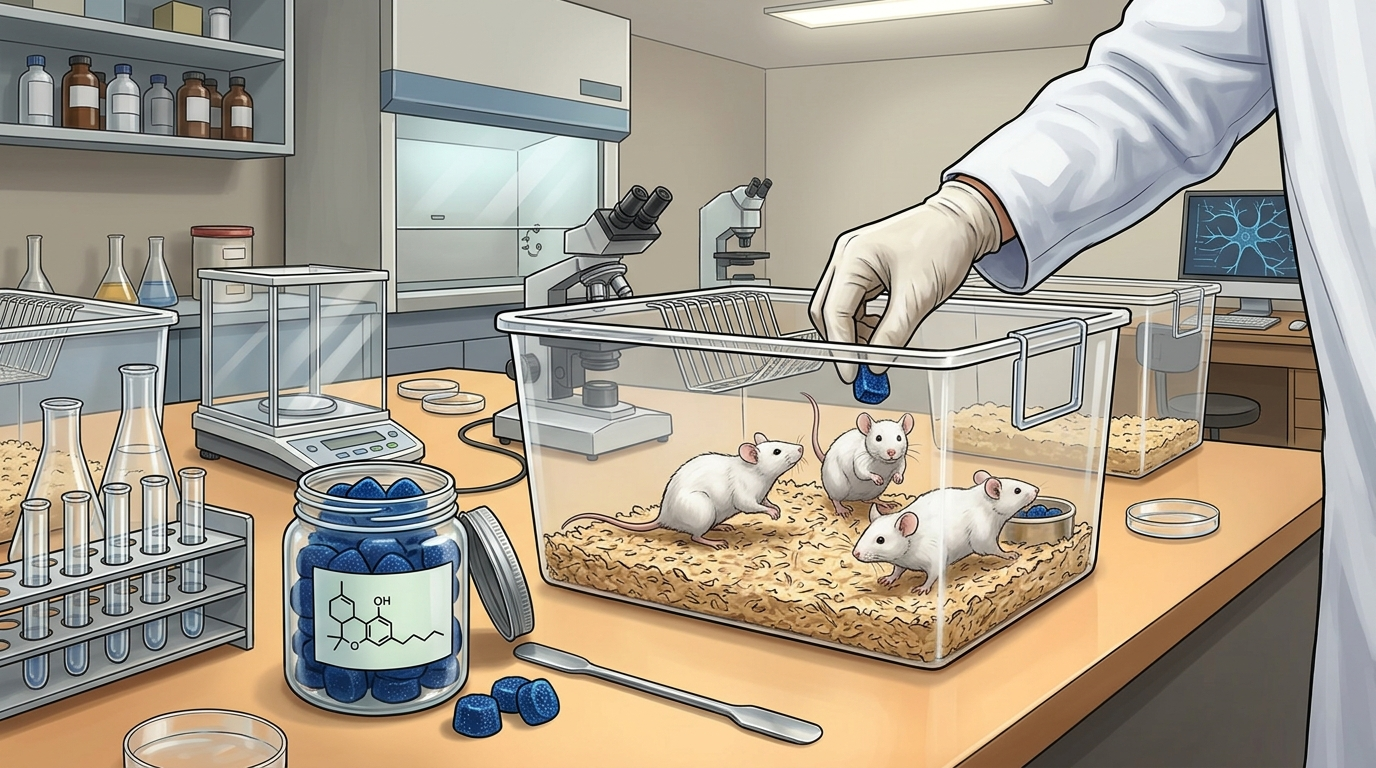
A cannabis-derived ingredient sold in sleep gummies may carry a greater dependence risk than consumers realize. New research found that repeated exposure to cannabinol, known as CBN, caused tolerance and withdrawal symptoms in mice.
The findings raise concerns about products promoted for nighttime use, since frequent dosing can increase exposure. Researchers warned that CBN may present risks similar to THC, the main intoxicating substance in cannabis. However, CBN’s long-term effects in people remain largely unknown.
Signs of Tolerance and Withdrawal
Tolerance occurs when repeated exposure reduces a substance’s effects. A person may then need a larger dose to achieve the same result.
Withdrawal refers to symptoms that appear after regular use stops. Together, tolerance and withdrawal can signal physical dependence, though dependence is not the same as addiction.
In the new research, mice developed both responses after repeated CBN exposure. The results challenge the belief that CBN is a low-risk alternative to other cannabis compounds.
Scientists warned that CBN may carry risks similar to THC, although its long-term effects in humans remain largely unknown.
The study does not establish that people who use CBN gummies will develop dependence. Animal studies help researchers identify possible biological effects, but human bodies, doses, and patterns of use can differ.
Why CBN Is Added to Sleep Products
CBN forms as THC ages and breaks down. It is often marketed as a sleep aid, including in gummies that may also contain cannabidiol, or CBD, and small amounts of THC.
Interest in CBN has grown faster than the evidence supporting many product claims. Research on its sleep effects, safe dosage, drug interactions, and long-term use remains limited.



That gap matters because gummies make regular use easy. Their delayed effects may also lead some consumers to take another serving before the first has reached its full effect.
Key questions remain unanswered:
- How much CBN can cause tolerance in people?
- How long must exposure continue before withdrawal can occur?
- Do CBD, THC, medications, or alcohol change the risk?
- Are older adults or people with sleep disorders more vulnerable?
Evidence Calls for Caution, Not Panic
The mouse findings offer an early warning rather than a final judgment. Researchers would need controlled human studies to determine whether the same reactions occur in consumers.
Such studies should track dose, frequency, sleep quality, side effects, and symptoms after use ends. They should also compare pure CBN with mixed cannabinoid products, since retail gummies often contain several active ingredients.
The results may also increase pressure for clearer labels and better testing. Consumers cannot assess risk well if packages do not accurately state cannabinoid levels or explain the limits of existing research.
People using CBN nightly should avoid assuming that a cannabis-derived product is harmless. Those who notice rising dose needs, poor sleep after stopping, or other symptoms may want to consult a qualified health professional.
For now, the main finding is clear: CBN should not be treated as risk-free simply because it is less familiar than THC. The next step is human research that can measure dependence risk and guide safer dosing, labeling, and use.