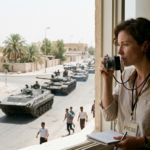


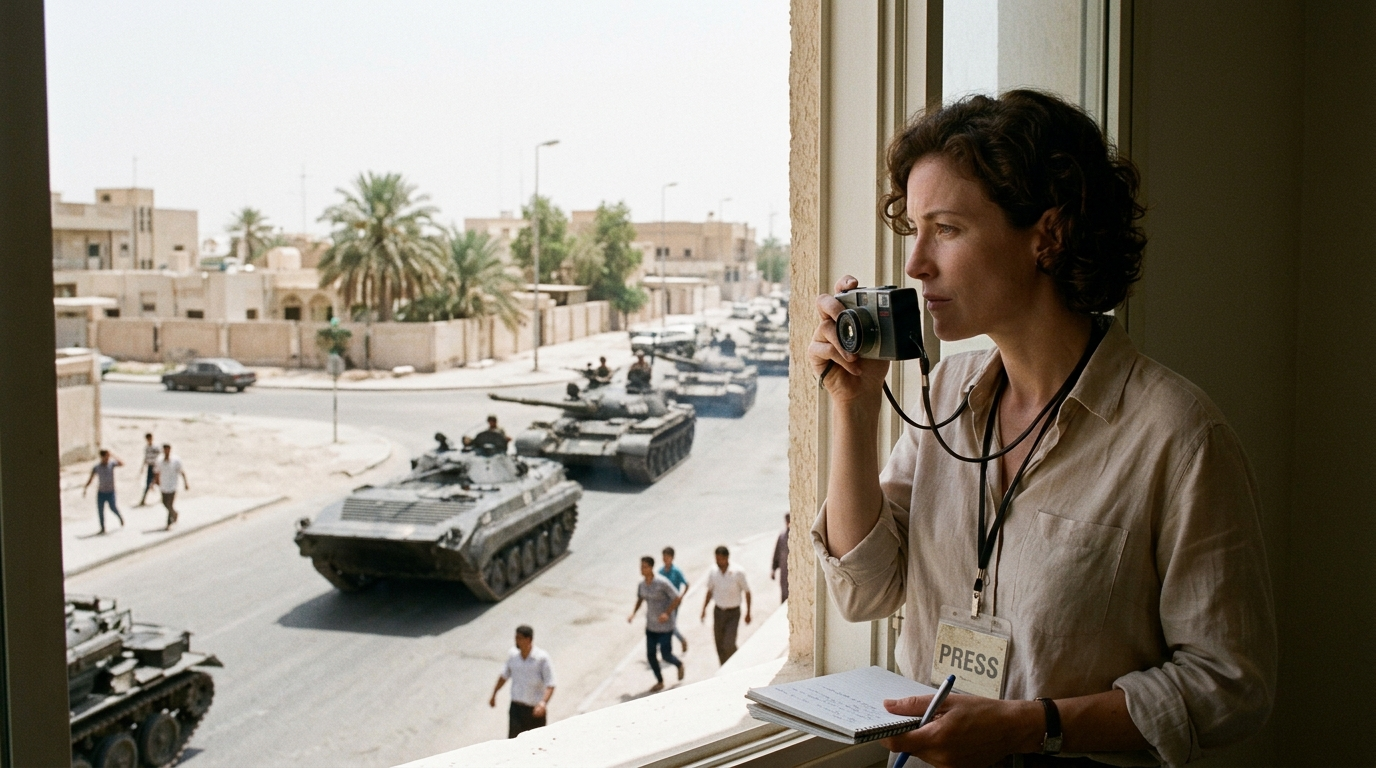
A Washington Post journalist was among the few Western reporters in Kuwait when Iraqi forces invaded in August 1990, placing her close to an event that triggered a major international crisis.
Her presence offered readers a rare view from inside the country as Saddam Hussein’s military seized key sites. Foreign correspondents faced tight controls, disrupted communications, and serious personal risk.
A Sudden Military Takeover
Iraqi forces entered Kuwait on Aug. 2, 1990. The attack quickly overwhelmed Kuwait’s smaller military and forced the government’s leaders to flee.
Hussein’s government later claimed Kuwait as part of Iraq. The move drew broad international condemnation and raised fears about regional security and global oil supplies.
The United Nations Security Council demanded Iraq’s withdrawal and imposed economic sanctions. A United States-led coalition began deploying forces to Saudi Arabia under Operation Desert Shield.
Reporting Under Occupation
The journalist’s assignment carried added importance because so few Western reporters remained inside Kuwait. Firsthand reporting helped show conditions that could not be easily verified from outside the occupied country.
“She was one of the few Western reporters in Kuwait in 1990 when Saddam Hussein’s forces invaded.”
Reporters working during an invasion must assess military claims, witness accounts, and rumors while protecting local sources. Those duties become harder when authorities monitor movement and communication.
Several pressures can shape coverage from an occupied country:



- Restricted access to government offices and military sites
- Interrupted telephone and broadcasting services
- Threats of detention, censorship, or expulsion
- Risks faced by residents who speak with foreign media
Such limits do not reduce the value of eyewitness reporting. Instead, they require careful wording and clear disclosure about what a journalist can confirm.
Why Firsthand Accounts Mattered
The invasion unfolded before online publishing and mobile communications became standard reporting tools. News organizations relied heavily on landline calls, satellite links, wire services, and reports carried across borders.
A correspondent inside Kuwait could document the atmosphere among residents and the visible conduct of occupying forces. That reporting could challenge official accounts from Baghdad, Washington, and other capitals.
Yet proximity did not guarantee a complete picture. One reporter could observe only part of a rapidly changing conflict. Editors therefore had to compare field reports with diplomatic statements, intelligence assessments, and accounts from refugees.
A Crisis With Lasting Effects
After months of failed diplomacy, the United States-led coalition launched Operation Desert Storm in January 1991. Coalition forces expelled Iraqi troops from Kuwait the following month.
The war reshaped American military involvement in the Middle East. Its aftermath included sanctions on Iraq, disputes over weapons inspections, and a prolonged United States presence in the region.
The Washington Post journalist’s experience also reflects the role of war correspondents as independent witnesses. Their work can preserve details that governments, armed forces, and later histories may describe differently.
Her reporting position in Kuwait was rare, but the questions it raised remain current. Newsrooms covering wars must balance speed with verification, while protecting journalists and local sources. Firsthand accounts remain valuable when paired with evidence, context, and open acknowledgment of reporting limits.