




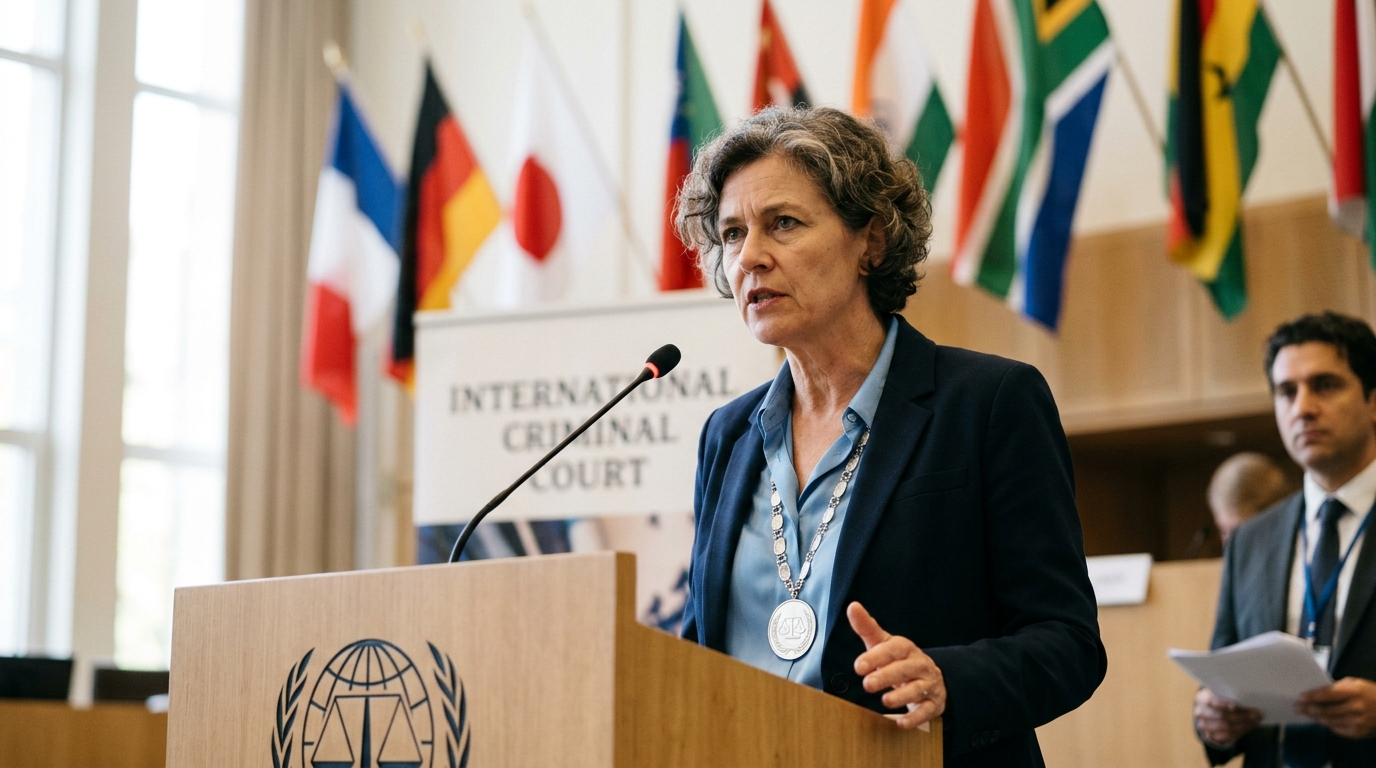
The International Criminal Court’s president has accused the Trump administration of trying to block international justice through penalties aimed at the tribunal.
The court’s leader vowed that the pressure campaign would fail. The dispute deepens a long-running conflict between Washington and the Hague-based court over its authority to investigate alleged war crimes.
The statement carries weight because the ICC depends on international cooperation. It has no police force and relies on governments to arrest suspects, protect witnesses, and support its work.
A Direct Challenge to the Court
The ICC president described the administration’s measures as an effort to obstruct international justice. The response was also defiant, making clear that the tribunal did not plan to retreat.
The penalties are intended to obstruct international justice, the ICC president said, while vowing that the effort would not succeed.
Specific penalties were not detailed in the statement. Still, sanctions can create practical problems for an international institution and its staff.
Financial restrictions may disrupt payments, travel, legal services, and dealings with companies. Even limited measures can make partners wary of working with a targeted organization.
That creates a pressure point with two sides. Washington can argue that sanctions defend national sovereignty. The court can argue that such measures weaken accountability for serious crimes.
A Conflict Rooted in Jurisdiction
The ICC began operating in 2002 under the Rome Statute. It prosecutes individuals accused of genocide, crimes against humanity, war crimes, and the crime of aggression.



The United States is not a member of the court. Successive U.S. administrations have disputed the tribunal’s authority over Americans and citizens of allied countries.
Supporters of the ICC say no government should place its officials outside international scrutiny. Critics say an unelected tribunal should not claim authority over countries that never joined it.
Those competing views explain why clashes with Washington keep returning. The legal debate is serious, but the political temperature is rarely subtle.
Sanctions Could Reach Past The Hague
The immediate target is the court, but the effects could spread to lawyers, investigators, banks, technology providers, and civil society groups.
Several issues will shape the dispute:
- Whether governments continue cooperating with ICC investigations and arrests.
- Whether financial institutions restrict services to avoid sanctions risk.
- Whether other countries publicly defend the court or seek compromise.
- Whether legal challenges test the scope of the administration’s penalties.
Victims may face the greatest cost if investigations slow. Court cases already take years, often because suspects remain outside ICC custody.
At the same time, the administration’s position reflects a concern shared by many U.S. officials: international courts should not override national authority without clear consent.
A Test of Institutional Resolve
The ICC president’s vow signals that the court sees the dispute as larger than one policy fight. Its credibility depends on appearing independent when powerful governments object.
Yet resolve alone will not keep cases moving. The tribunal will need political backing, practical support, and continued cooperation from member states.
The next test will be whether the penalties change how governments and private organizations deal with the court. If cooperation holds, Washington’s pressure may have limited effect. If partners pull away, the damage could be substantial.
For now, the ICC has answered pressure with public resistance. The larger question is whether international justice can function when a major global power is pushing in the opposite direction.