



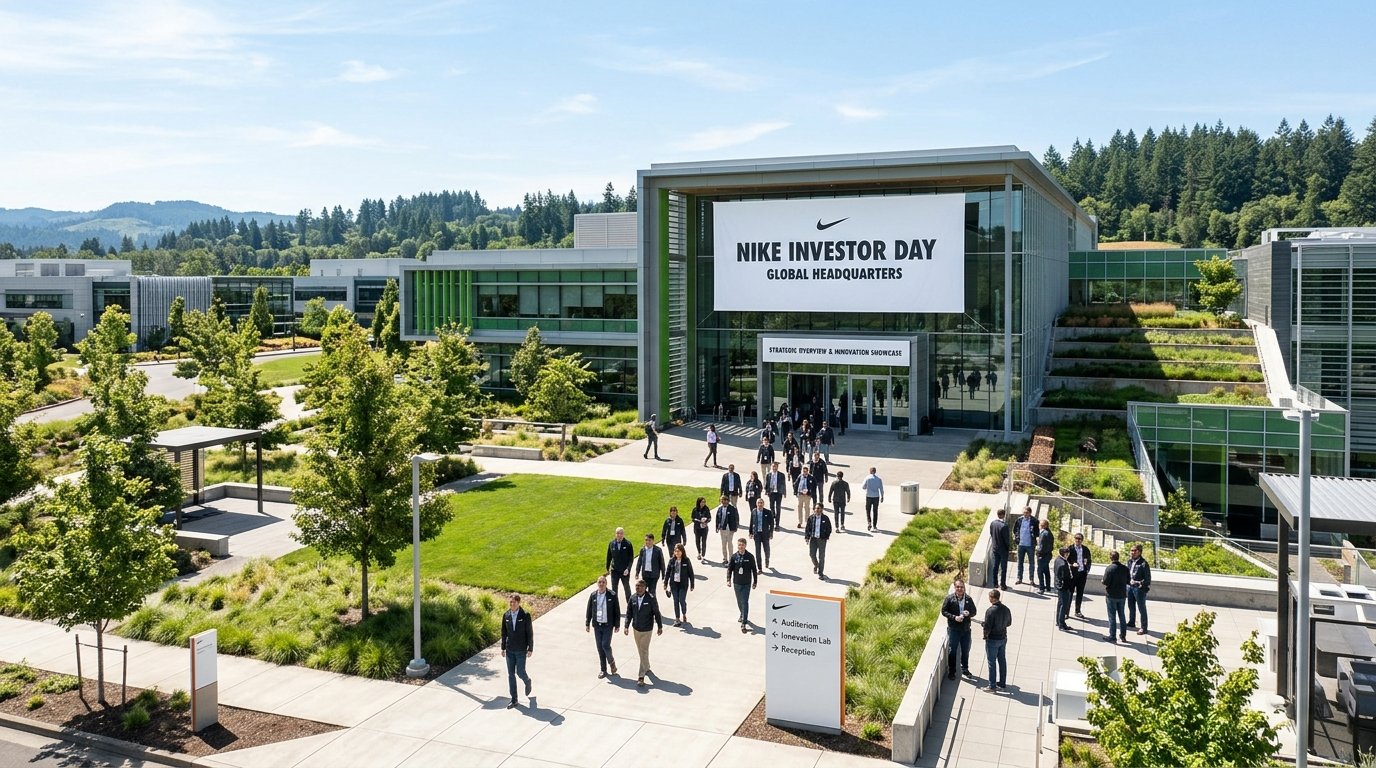
Nike is hosting an investor day at its Oregon headquarters, giving company leaders a high-profile chance to show that its turnaround is producing results.
The event comes as investors seek clearer evidence that the sportswear company can restore momentum. Management must explain what has changed, how the plan is working, and when stronger performance may follow.
Turnaround Faces an Investor Test
Investor days allow senior leaders to present strategy, financial priorities, and long-term targets. They also give analysts an opportunity to question management about risks that may be less visible in quarterly reports.
For Nike, the central issue is execution. A turnaround plan may include changes to products, marketing, distribution, or internal operations. Investors will want proof that these efforts are improving demand and strengthening the business.
The location carries symbolic weight. Hosting the meeting at Nike’s Oregon headquarters lets the company present its strategy from the center of its operations. It also gives executives greater control over how they demonstrate products, teams, and future plans.
Evidence Matters More Than Promises
Nike’s leaders face a basic challenge: strategic claims must be supported by measurable progress. Investors are likely to focus on sales trends, profit margins, inventory levels, product demand, and the outlook for future growth.
Several questions will shape the market’s judgment:
- Are new products gaining interest from consumers?
- Is demand improving across major sales channels?
- Can Nike protect profit while investing in its recovery?
- How quickly could the turnaround affect financial results?
Clear targets could help investors track the plan over time. However, ambitious forecasts may create added pressure if results fall short. Management must balance confidence with realistic expectations.



Brand Strength Meets Operational Pressure
Nike enters the event with global recognition and a long history in athletic footwear and clothing. Yet brand recognition alone does not guarantee steady growth. Consumer tastes can shift quickly, while competitors can gain ground through new designs, pricing, or focused marketing.
The company must also manage how it sells its products. Direct sales can provide closer customer relationships and more control over presentation. Retail partners, meanwhile, can offer broad reach and access to shoppers who compare several brands in one place.
A credible recovery plan may need both channels. Investors will watch for signs that Nike can support its own stores and digital operations without weakening important wholesale relationships.
What Investors Will Watch Next
The immediate market response may depend on the detail provided during the event. Specific financial goals, product schedules, and operational benchmarks would give analysts more material for evaluating progress.
Still, an investor presentation cannot settle the turnaround question by itself. The stronger test will come in later earnings reports, when Nike must show that its strategy is improving sales, margins, and customer demand.
The Oregon gathering therefore represents a key communication moment, rather than a final verdict. Nike has an opportunity to rebuild confidence, but investors will expect its message to be followed by consistent results.
The next steps will be measured quarter by quarter. Product reception, inventory discipline, retail partnerships, and financial performance will show whether the turnaround is taking hold or needs more time.