





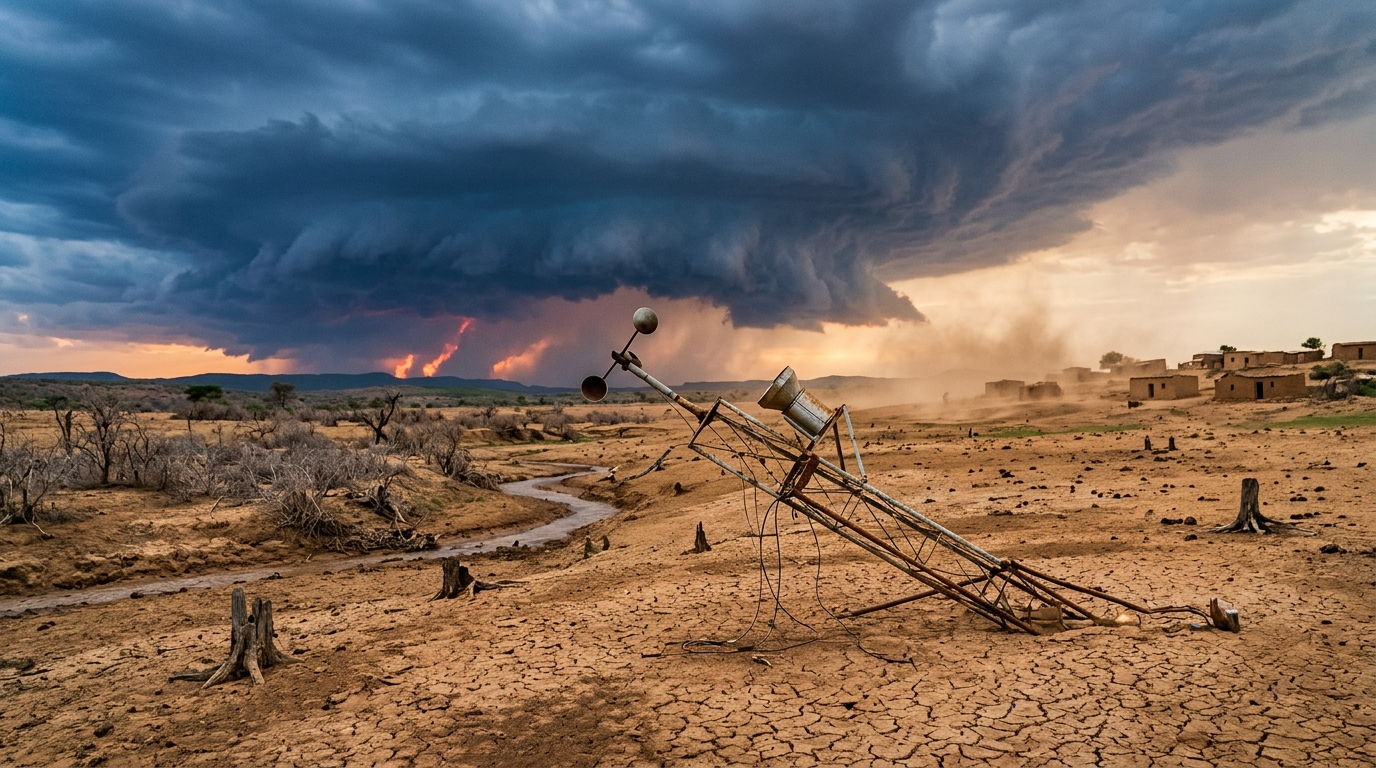
Investing in weather and climate observations in low-income countries could prevent disasters far outside their borders. The case for stronger monitoring is urgent as floods, droughts, heat waves, and storms grow more damaging.
A central warning published by Nature is direct: “Investing in observations in low-income countries will help to prevent climate disasters worldwide.” The message frames local monitoring as a shared form of global protection, not simply foreign aid.
Missing Data Weakens Forecasts
Weather forecasts depend on frequent measurements from land stations, ocean buoys, aircraft, radar, and satellites. These systems track temperature, rainfall, air pressure, wind, and humidity.
Satellites provide broad coverage, but they cannot replace measurements taken near Earth’s surface. Ground observations help scientists check satellite readings and improve computer models.
Many low-income countries have too few stations, while some existing sites lack reliable maintenance, trained staff, or communications links. Equipment can also fail because funding often supports installation without paying for long-term operation.
The resulting gaps affect forecasts across national borders. Air masses, storms, rivers, and ocean currents do not stop at political boundaries. Missing observations in one region can reduce warning times elsewhere.
The Cost of Weak Warning Systems
Poor observations can leave governments with less time to evacuate residents, protect crops, move livestock, or prepare hospitals. Small forecasting errors may become deadly when communities live in flood zones or depend on rain-fed farming.
The World Meteorological Organization has repeatedly reported major gaps in early-warning coverage. Its Early Warnings for All initiative seeks to protect every person on Earth with warning systems by the end of 2027.



Such systems depend on four linked functions:
- Reliable observations and hazard monitoring
- Accurate forecasts and risk analysis
- Warnings that reach exposed communities
- Local plans that turn alerts into action
Investment in instruments alone will not solve the problem. Countries also need technicians, stable operating budgets, secure data links, and public agencies able to issue clear alerts.
A Global Public Benefit
Support for observation networks can create benefits far from the country receiving funds. More measurements give forecasting centers better information about developing weather systems. They also improve climate records used to plan dams, roads, farms, and power grids.
Open data sharing is another key issue. Governments may face technical, financial, or security concerns about releasing observations. International agreements can help set common standards while respecting national control.
Wealthier countries also have an interest in sustained funding. Better forecasts can protect international shipping, food supplies, aviation, insurance markets, and humanitarian operations. Earlier warnings may reduce the need for costly emergency relief after a disaster.
Funding Must Support Long-Term Operations
Short projects can leave countries with equipment they cannot repair or replace. Effective programs must account for maintenance, calibration, staff training, electricity, communications, and future upgrades.
Funding decisions should also reflect local priorities. A coastal state facing cyclones may need radar and ocean observations. A drought-prone farming region may gain more from rain gauges, soil monitoring, and seasonal forecasts.
Stronger observation networks will not stop extreme weather. They can, however, give officials and residents more time to act. The next test is whether governments and international lenders treat climate data as essential public infrastructure.
The broader lesson is clear: an observation gap in a low-income country can become a forecasting gap for everyone. Stable investment, open cooperation, and locally managed warning systems can reduce that shared risk.