





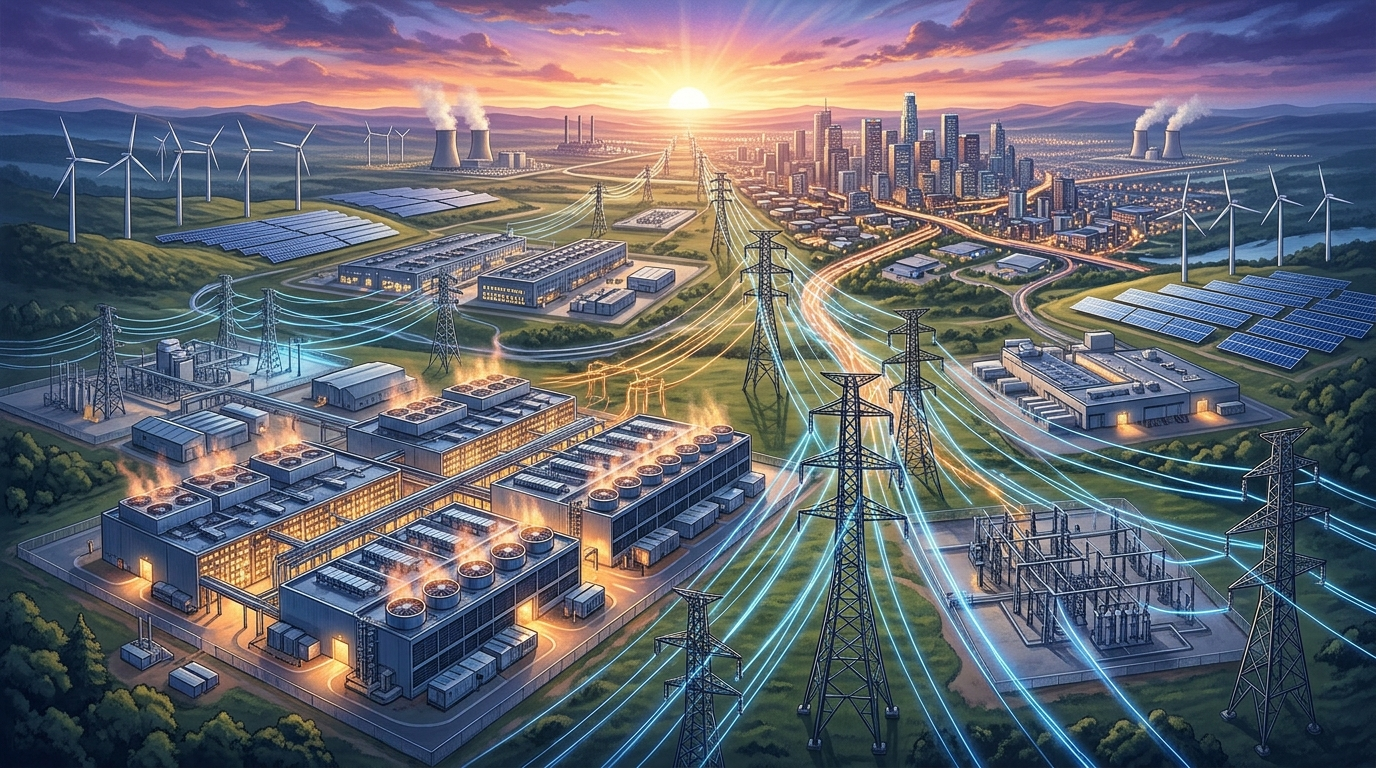
US electricity use is expected to reach record levels in 2026 and 2027 as artificial intelligence data centers and wider electrification increase demand.
The US Energy Information Administration issued the forecast Tuesday in its Short-Term Energy Outlook. The federal agency identified expanding data centers and the shift from fossil fuels to electricity as major sources of growth.
The projection puts new pressure on utilities, grid operators and regulators. They must add enough generation and transmission capacity while keeping electricity reliable and affordable.
AI Data Centers Reshape Electricity Demand
Data centers consume electricity around the clock to run servers, storage systems and cooling equipment. AI services can require especially large amounts of computing power.
That demand is becoming a central issue for the power industry. Large facilities may need electricity supplies comparable to those of major industrial sites. New projects can also arrive faster than utilities can build power plants or transmission lines.
The EIA said US power consumption will rise to “record highs in 2026 and 2027,” driven by “AI-hungry data centers and electrification.”
The forecast suggests AI growth is no longer only a technology-sector issue. It now affects energy planning, infrastructure spending and decisions about where companies place new facilities.
Utilities may need to assess whether local grids can serve large data centers without reducing reliability for homes and other businesses. Regulators will also face questions about who should pay for upgrades built to connect major new users.
Electrification Adds Another Source of Growth
Electrification is also lifting demand as more activities switch from direct fossil-fuel use to electricity. The trend can include electric vehicles, heat pumps and industrial equipment.

This shift can lower emissions when electricity comes from cleaner sources. However, it also moves energy demand onto a grid that must balance supply and use every second.
Several factors will shape how much strain the transition creates:
- The speed and location of new data center construction
- The pace of electric vehicle and heat pump adoption
- Available power generation during periods of high demand
- The time required to approve and build transmission projects
Demand growth does not affect every region in the same way. Areas attracting clusters of data centers could face sharper increases than the national average. Regions with limited transmission capacity may encounter delays or higher costs.
Utilities Face Reliability and Cost Questions
Record consumption can create investment opportunities for power producers, renewable-energy developers and grid equipment makers. It can also expose limits in aging infrastructure.
New generation may include natural gas, solar, wind, nuclear power and battery storage. Each option carries different costs, construction schedules and reliability features. Transmission expansion will be needed to move electricity from new power sources to growing demand centers.
The EIA outlook is a forecast rather than a fixed result. Economic growth, weather, energy prices and project delays can change actual consumption. AI efficiency gains could also reduce electricity use per computing task, even as total computing activity rises.
Still, the agency’s expectation of consecutive record years signals a clear change in US electricity needs. Power planning must now account for rapid growth from both digital infrastructure and electrified transport, buildings and industry.
The main issue to watch is whether grid investment can match that growth. If construction falls behind, consumers could face higher costs and new projects may wait longer for connections. If expansion keeps pace, the surge could support electrification while maintaining reliable service.