




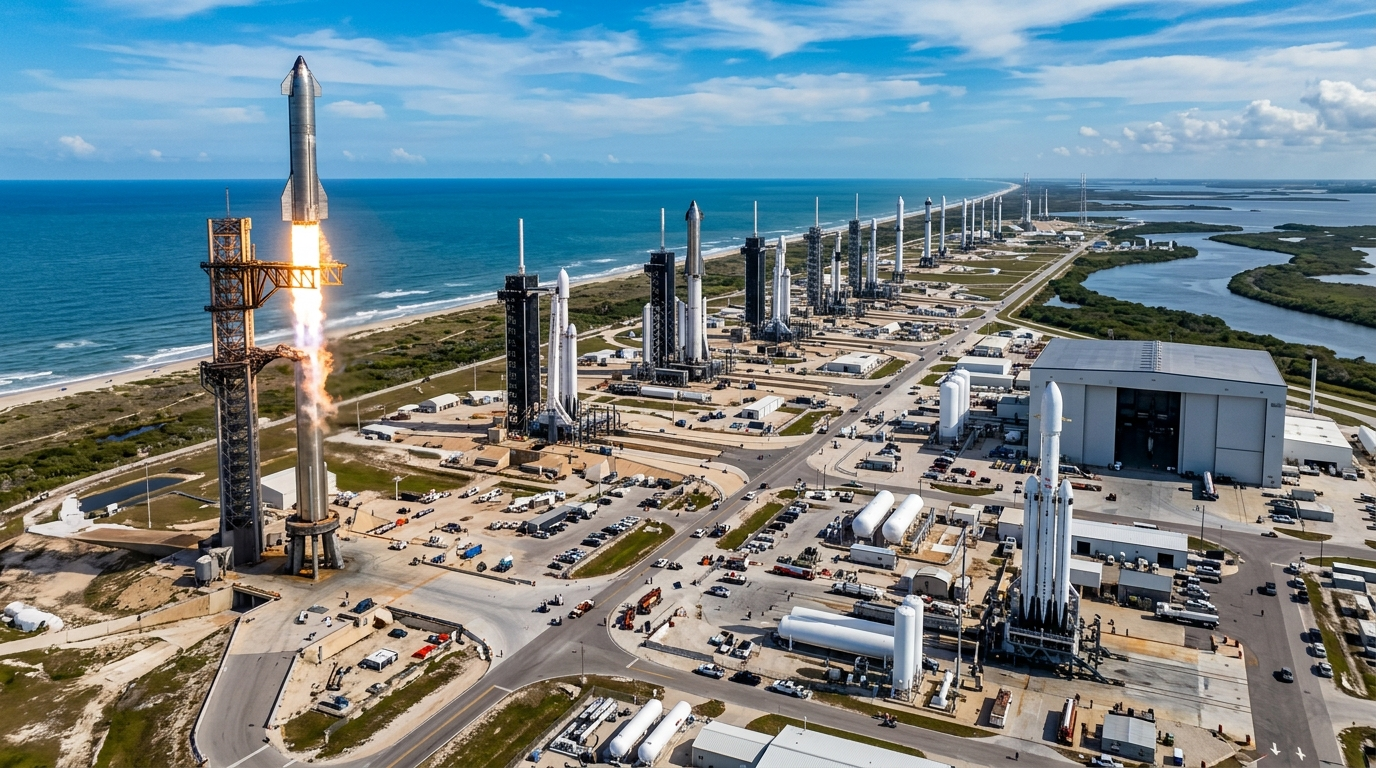
SpaceX says a new spaceport will support thousands of launches each year, signaling plans for a sharp increase in flight activity.
The company has not disclosed the facility’s location, opening date, construction schedule, or expected cost. It also has not specified which vehicles would operate there. Those missing details will shape whether the launch target is practical.
SpaceX described the project in broad terms, linking the spaceport to its need for far more launch capacity. The stated annual volume would require frequent flights, efficient ground operations, and approval from government regulators.
A Launch Target on a Vast Scale
“The new spaceport will support thousands of launches each year,” according to SpaceX.
Thousands of annual launches would mean several flights per day. Even at the low end of that range, the site would need to process vehicles at a pace unlike most existing launch facilities.
The claim does not establish that every planned launch will occur. Capacity describes what a facility may be designed to handle, while actual flight rates depend on demand, vehicle readiness, weather, and permits.
Several operational questions remain unanswered:
- Which rockets and spacecraft would use the site
- How launches would be scheduled and controlled
- Whether the vehicles would be reused
- How nearby airspace and waters would be managed
- What environmental reviews would be required
Infrastructure and Regulatory Pressure
A spaceport built for daily operations would require more than launch pads. Fuel systems, vehicle assembly areas, communications equipment, safety zones, and emergency services would all face heavy demand.
Regulators would also need to assess each operating plan. Launch licenses often address public safety, flight paths, debris risks, and possible effects on surrounding communities.



Location will be a major factor. Coastal sites can provide flight paths over open water, but they may also sit near wildlife habitats, fishing areas, or populated communities. Inland operations can create different safety and land-use concerns.
High launch frequency could also affect aviation and shipping. Temporary closures may protect the public during flights, yet repeated restrictions could disrupt commercial routes. The impact would depend on the site and flight schedule.
Economic Gains and Local Concerns
A large spaceport could create construction work and long-term technical jobs. It may also attract suppliers, logistics firms, and research organizations to the surrounding area.
Communities may weigh those benefits against noise, traffic, land use, and environmental effects. Frequent launches could intensify that debate, especially if operations occur near homes or protected areas.
Local and national officials will likely seek firm data before judging the proposal. Key information would include projected employment, public spending, launch noise, emissions, and plans for accidents or delays.
What Comes Next
SpaceX’s statement offers an ambitious capacity goal, but not enough information to measure progress. Site selection, permit filings, environmental studies, and construction plans would provide clearer evidence.
The project’s significance will depend on whether SpaceX can pair rapid vehicle reuse with equally rapid ground processing. Reliable demand will matter as much as engineering performance.
For now, the announcement points to a future built around much more frequent access to space. The next details to watch are the location, timeline, vehicles, and regulatory path. Those decisions will determine whether thousands of yearly launches become an operating plan or remain a long-term target.