


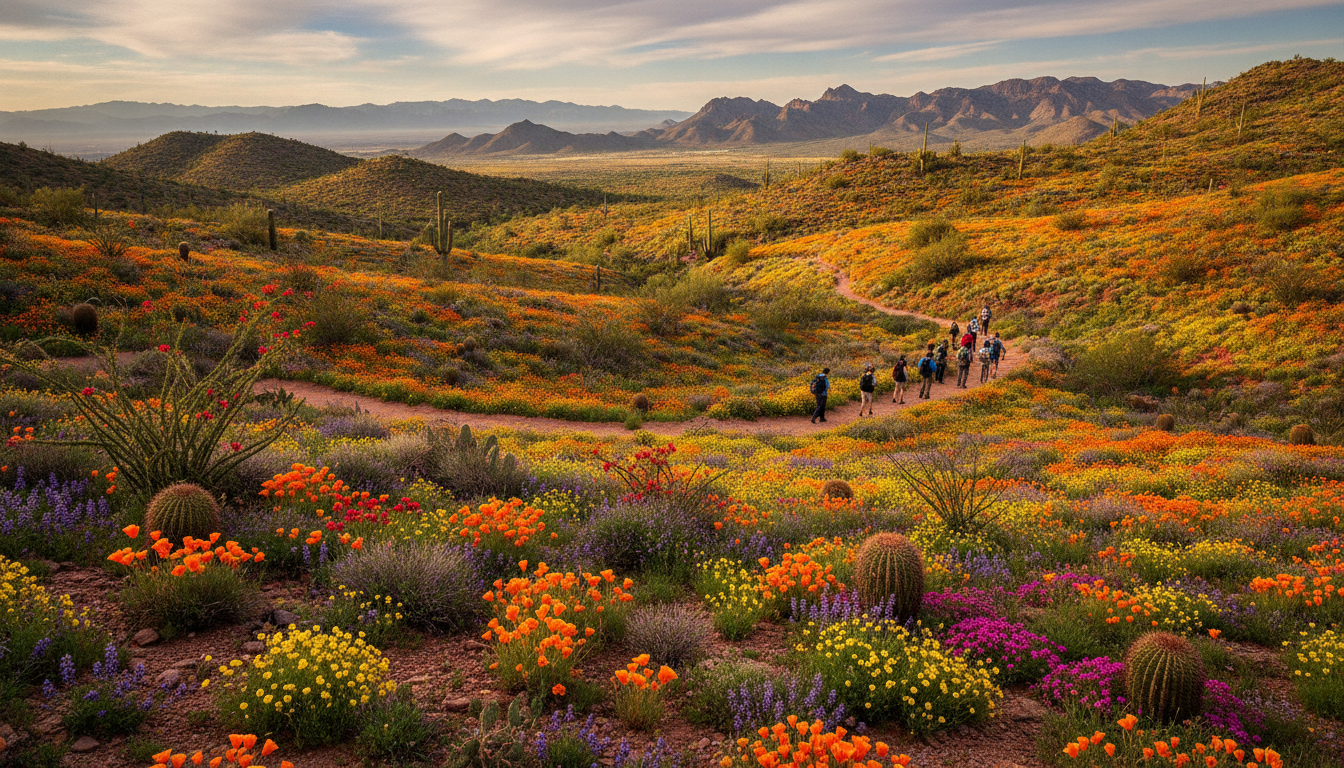
After a season of rare, soaking storms, vast deserts are bursting with color as dormant seeds erupt into flowers across the sand. From California’s Anza-Borrego to Arizona’s Sonoran trails, visitors are racing to witness a brief and fragile display that appears only when rain is generous and well-timed.
The blossoms, often called a super bloom, arrive when winter and early spring moisture reaches deep seed banks. They can blanket valleys, dunes, and dry washes for a few short weeks. The result draws hikers, photographers, and local businesses that depend on seasonal tourism.
These massive wildflower blooms create colorful carpets over desert landscapes during unusually rainy years.
What Triggers a Super Bloom
Botanists point to three drivers: soaking winter rain, mild temperatures, and calm winds that protect fragile sprouts. When these align, seeds that waited for years can sprout together.
El Niño winters often raise the odds by steering heavier storms into the Southwest. In past wet years, fields of desert gold, sand verbena, and evening primrose have painted entire basins. Timing matters. A warm snap can speed flowering. A late frost can end it.
Soil crusts also play a role. If the surface is disturbed by off-road travel, seeds can lose the shelter they need to germinate. Land managers warn that a single tire track can slice through a whole patch.
Ecology and Economy
The blooms feed native bees, hummingbirds, and seed-eating rodents at a key moment before summer heat. Pollinators move from patch to patch, helping rare plants set seed for the next cycle. Some wildflowers, like lupines and poppies, help fix nutrients in poor soils.
Communities near trailheads often see packed parking lots and sold-out rooms. Gift shops and cafes extend hours to serve crowds. For many residents, the brief surge offsets slow months. Park agencies, however, brace for traffic backups and search-and-rescue calls tied to sudden heat or dehydration.
- Peak color can last one to three weeks.
- Cloud cover can extend blooms by keeping soils cool.
- Wind and heat can shorten the display within days.
Managing Crowds and Protecting Habitat
Managers are placing temporary fencing around sensitive areas and adding portable restrooms at popular overlooks. They urge visitors to stay on marked paths. A single step into a flower patch can crush stems and compact the soil, reducing next year’s seed set.


Trampling is not the only threat. Invasive grasses can surge after wet winters, then dry into tinder by summer. Fire crews worry that a lush spring can lead to a harsh fire season months later. Agencies are increasing weed pulls and warning against picking flowers that may transport seeds.
Guides also remind visitors to pack extra water, sun protection, and a paper map. Cell signals fade in canyons, and unpaved roads can trap cars after rain. Simple planning keeps people safe and reduces strain on rescue teams.
Science in Bloom
Researchers are using satellite images to map where color appears first. Early signals often show along alluvial fans and gentle slopes that hold moisture. Field crews then confirm species on the ground and collect data on pollinators.
These records help forecast which valleys might light up in the next wet year. They also guide seed banks that store native species for future restoration. The hope is to keep native blooms strong even as heat, drought swings, and development test fragile habitats.
What To Watch Next
Forecasters expect cooler nights to hold color in some basins through the next week. If winds stay light, petals may persist longer at higher elevations. Drivers should check park alerts for road closures and full parking areas before leaving home.
Local leaders see a chance to balance access with care. Small steps, like shuttle services to busy trailheads and clear trail markers, can spread crowds and protect the view that draws them.
The flowers will fade fast. The seeds they set now could wait years for the next perfect storm of rain and calm. For visitors, the message is simple. Take only photos, watch your step, and let the desert rest for another season of surprise.