




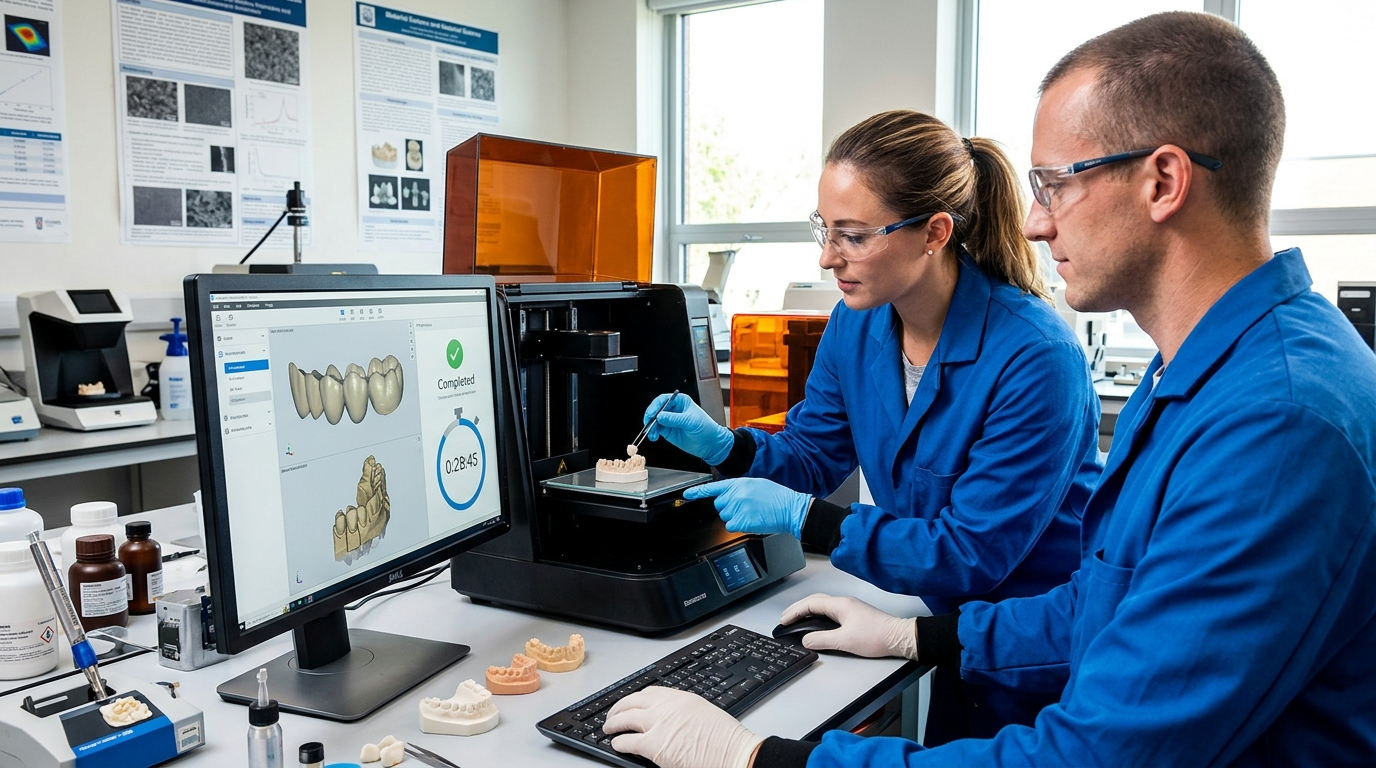
Researchers have reduced the processing time for 3D-printed zirconia crowns from as much as 100 hours to under 30 minutes. The advance could help dentists produce customized permanent crowns during a single appointment, although clinical adoption will require further testing.
The sharp reduction targets one of the main barriers facing chairside 3D printing. Printing a crown is only part of the process. The restoration must also undergo treatment that gives the material its final strength and shape.
From Several Days to Minutes
Conventional processing can take up to four days, depending on the equipment and production method. Cutting that period to less than half an hour changes the possible role of 3D printing in dental offices.
The reported improvement represents a reduction of more than 99% compared with a 100-hour process. It could move production from an outside laboratory into the dental clinic.
- Previous maximum processing time: about 100 hours
- New reported processing time: under 30 minutes
- Potential use: permanent crowns made during one visit
Faster processing could also shorten the period that patients must wear temporary crowns. Those temporary restorations protect prepared teeth while permanent crowns are produced.
Why Zirconia Matters in Dentistry
Zirconia is used for permanent dental restorations because it can withstand strong biting forces. Dentists also value its tooth-colored appearance and its suitability for customized designs.
Digital dentistry already allows clinicians to scan a patient’s mouth and design a crown on a computer. However, manufacturing speed often determines whether the final restoration can be completed during the same visit.
Some clinics use milling machines to shape crowns from solid blocks. Three-dimensional printing takes another approach, building the restoration layer by layer. That method may reduce material waste and make it easier to produce complex forms.


Yet zirconia printing has faced a basic trade-off. The material must be processed carefully to reach the density and strength needed for long-term use. Slow treatment can limit the value of rapid printing.
Questions Before Clinical Adoption
The time savings are substantial, but speed alone will not decide whether dentists adopt the process. Printed crowns must meet safety and performance standards under daily chewing, temperature changes and long-term wear.
Researchers and regulators will need evidence that rapid processing does not weaken the crown or alter its fit. Studies may also need to compare the printed restorations with laboratory-made and milled zirconia crowns.
Cost will be another factor. Dental practices would need suitable printers, processing equipment, trained staff and quality-control systems. A faster method may still be impractical if the equipment is expensive or difficult to operate.
Patients could benefit if the system proves reliable. A same-day permanent crown may mean fewer injections, fewer appointments and less time away from work or school. Dentists could also make design changes without sending the case back to a laboratory.
Potential Impact on Dental Laboratories
Chairside printing would not necessarily replace dental laboratories. Complex cases may still require specialized technicians, advanced color matching or restorations involving several teeth.
Instead, the technology could shift routine cases into clinics while laboratories focus on harder work. Its effect will depend on crown quality, equipment prices and the number of cases a practice handles.
The reported processing time offers a clear sign that permanent, same-visit printed crowns may be getting closer to routine care. The next test is whether that speed can be paired with reliable fit, lasting strength and affordable operation.