




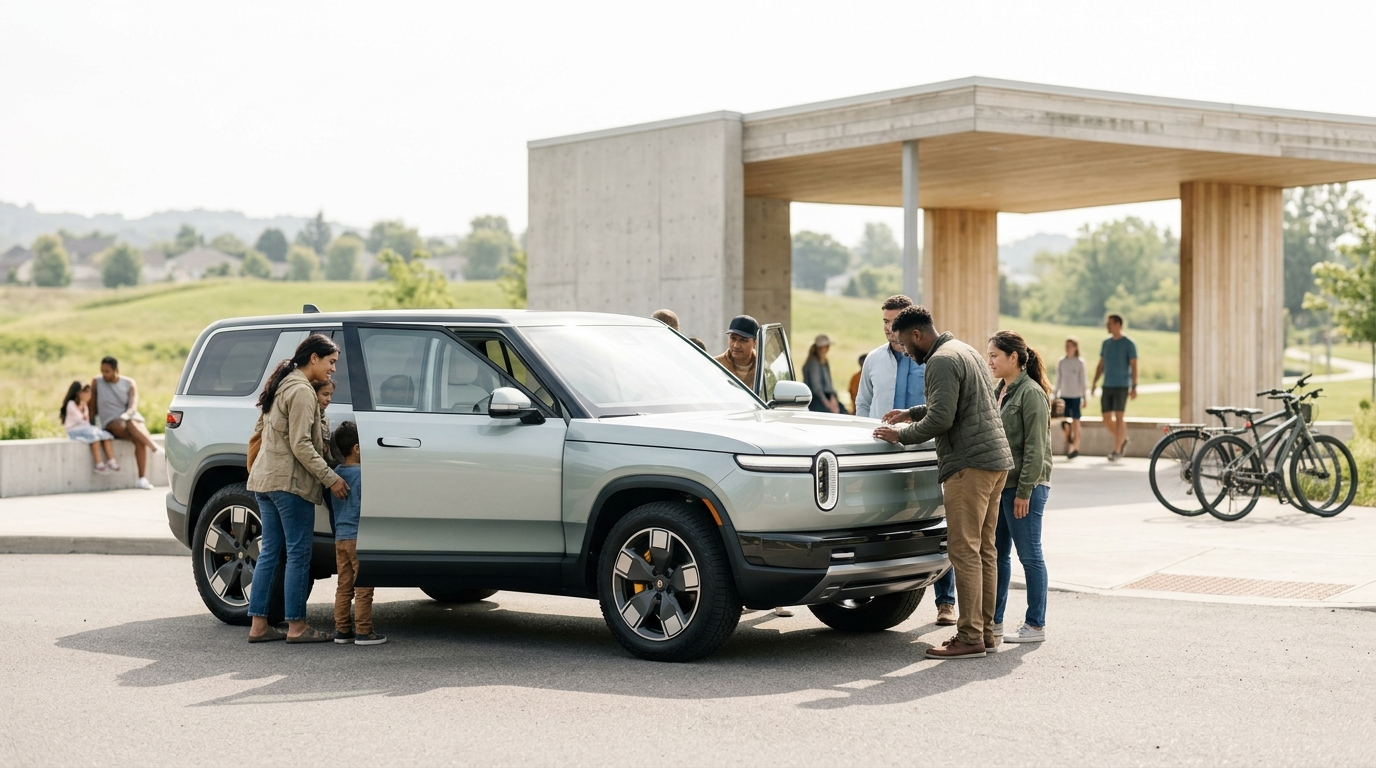
Rivian’s new R2 brings ideas from the company’s larger, more expensive vehicle to a model designed for mainstream buyers. The electric automaker is using the smaller vehicle to pursue customers who may have found its earlier offerings too large or costly.
The strategy reflects a central challenge for electric vehicle makers. Premium models can build a brand and support higher prices, but wider growth depends on more affordable vehicles. Rivian is presenting the R2 as its answer, while seeking to preserve the qualities associated with its bigger sibling.
A Smaller Model With Broader Goals
The R2 follows a familiar path in the auto industry. Manufacturers often establish their identity with expensive flagship vehicles before moving into larger market segments.
Rivian’s approach is based on transferring successful features from a higher-priced model into a smaller package. It also adds features intended to serve a broader group of drivers.
That balance will shape how buyers judge the R2. A lower-priced vehicle must control production costs without feeling like a stripped-down alternative. Rivian must also make the model practical for everyday driving, not only for customers drawn to the company’s premium image.
- A smaller format may suit more households and urban drivers.
- A lower market position could expand Rivian’s customer base.
- Shared design ideas may help maintain a clear brand identity.
- Added features may distinguish the R2 from its larger sibling.
Affordability Is Central to EV Growth
The R2 arrives as automakers work to move electric vehicles from premium purchases into the mass market. Price remains one of the biggest barriers, alongside charging access, driving range and concerns about long-term ownership.
A vehicle aimed at mainstream customers must compete on more than electric technology. Buyers will compare its space, comfort, utility and total ownership cost with gasoline vehicles and other electric models.
Rivian’s larger vehicles helped define the company’s public identity. The R2 carries a different commercial task. It must turn that recognition into greater sales volume while meeting the tighter cost limits of a lower-priced segment.



Execution Will Determine the Outcome
Design alone will not decide whether the R2 succeeds. Rivian will need to manage production, quality and delivery while maintaining the features that make the vehicle appealing.
Mass-market sales can place heavy demands on manufacturing and service operations. More owners mean more vehicles to build, deliver, repair and support. Any delays or quality problems could weaken the value of a lower entry price.
Competition will also be intense. Established automakers and newer electric brands are pursuing buyers who want useful electric vehicles at attainable prices. Rivian must show that the R2 offers a clear reason to choose it over those alternatives.
A Test of Rivian’s Next Phase
The R2 represents more than a smaller addition to Rivian’s lineup. It is a test of whether the automaker can translate its premium formula into a vehicle suited to a much larger audience.
Key details such as final pricing, standard equipment, production timing and real-world performance will determine its reach. Buyers will also watch whether features from the larger model retain their value in the smaller vehicle.
If Rivian delivers that balance, the R2 could widen the company’s appeal and support its move into higher-volume sales. The next stage will depend on execution, affordability and whether mainstream customers view the model as practical rather than aspirational.