

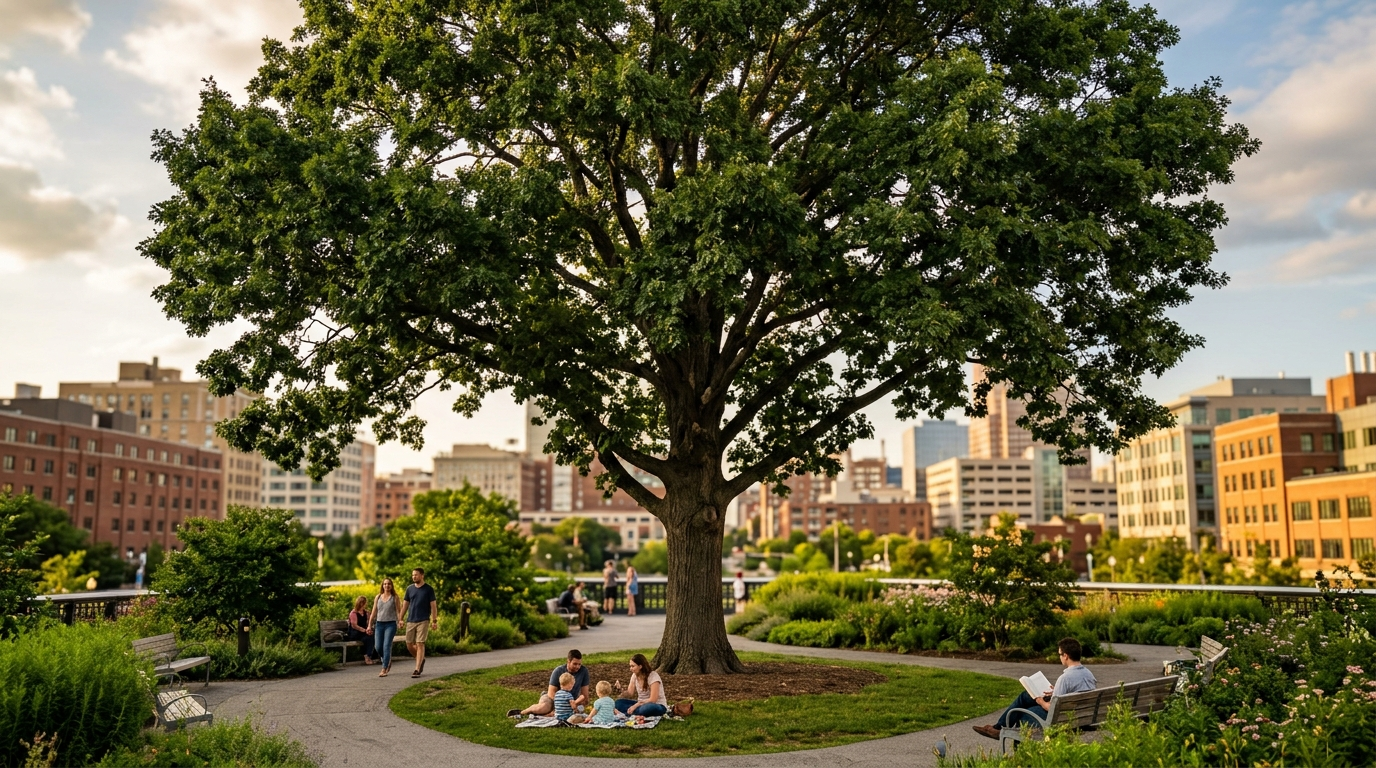
A new study has found that mature trees are especially valuable to cities, adding weight to calls for stronger protection of established urban forests.
Trees have long been linked to healthier and more comfortable city streets. The new finding sharpens that message. Planting young trees matters, but keeping older trees alive may provide benefits that replacements cannot quickly match.
Why Tree Age Matters
Mature trees usually have larger trunks, broader crowns and deeper root systems than younger trees. Those traits allow them to shade more pavement and buildings.
Shade can lower heat exposure for people walking, working or waiting for public transport. It can also reduce how much heat roads and walls absorb during the day.
Established trees may also support more wildlife and capture more rainfall than small, newly planted trees. Their leaves and branches can slow rain before it reaches drainage systems.
“We know that trees are good for cities. A new study finds that mature trees are especially good.”
The brief study finding does not identify the researchers, location, methods or measured outcomes. It also provides no figures comparing mature and young trees. Those details would be needed to judge the size and reach of the reported benefits.
Protection and Planting Serve Different Roles
Cities often promote tree-planting drives as part of climate, health and neighborhood improvement plans. Such programs can increase future canopy cover, especially in areas with few trees.
However, a sapling cannot immediately perform like a large established tree. It may take years or decades to develop a wide crown. Some planted trees also die before reaching maturity because of drought, limited soil, damage or poor maintenance.


The study’s central message suggests that urban forestry policies should track more than the number of trees planted. Officials may also need to measure survival, age, condition and canopy retained.
- Protect healthy mature trees during construction.
- Provide enough soil and water for young trees.
- Replace dangerous or dying trees when removal is necessary.
- Track canopy gains and losses across neighborhoods.
Hard Choices for Growing Cities
Protecting older trees can create conflicts. Roots may damage sidewalks, branches may threaten property, and some trees can become unsafe. Housing, roads and utility work can also place pressure on limited urban space.
These concerns mean that age alone should not decide whether a tree stays. Species, health, location and public safety also matter. Qualified inspections can help cities distinguish manageable problems from serious hazards.
Equity is another issue. Tree cover is often uneven across urban neighborhoods. If mature trees produce greater benefits, residents in low-canopy areas may face a larger gap that cannot be closed through planting alone.
The study adds a clear point to urban planning debates: existing mature trees are assets that take years to replace. Cities still need new planting, but planting totals should not hide the loss of established canopy.
Further information about the study’s methods and results will be important. For now, its finding supports a two-part strategy. Cities should plant for the future while caring for the large, healthy trees already serving residents.